A MOMENTARY LAPSE OF REASON - REVIEW
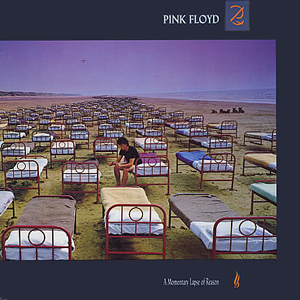
The album leads in with lakeside water sloshing and a creaky boat noises in Signs of Life, the first track. It's mostly gentle nature sounds and birdsong played under soft (yet still distinctly ominous) synthesizer notes. A guitar shows up halfway through to transform this song into its final form: slow-tempo, mid-80s prog-rock weirdness. No lyrics, and not much to speak of so far; this one is like soundtrack music for the inevitable sad, self-reflective part of every buddy-cop film of the era.
Learning to Fly, conversely, is peppy and hard right off the bat. Hefty electric guitar chords and industrial-style rhythmic drumming frame pop-ballad lyrics that feel like a distinctly new style for PF, almost "mainstream", if you will. The synthesizer does some weird wailing and flailing, common to '80s rock music, but its something I've never found especially musical. The singing and electric guitar in this track are very approachable - highly unusual for PF, and possibly indicative of a shift away from experimental and more into the "proven-results" territory.
The Dogs of War up next has a very stark change of tone, sounding more like The Wall-era style of experimental protest rock opera. A marching tonality, distant and echoing vocals, a disembodied choir punctuating an aura of misery - this song has all the hallmarks. This song has the approachable sounds of the mid-run PF albums of yore, but it lacks a distinctive pep that would make it viable for radio play. Wailing saxophone and hard-hitting organ music definitely crank up the energy in the second half of the song, though the rhythmic, plodding beat keeps things well-grounded in a uniform tempo.
One Slip follows with a sort of juxtaposition of technological beeping and digital noises played over tribal rhythms. After a minute or so, the electric guitar joins in and the vocalist shows up, and the song changes entirely into a very hard rock sound. Again, this one sounds like it would fit the mainstream, yet is still too unconventional for the radio - the tone of the track changes often, and everything feels very inconsistent, almost like a "Frankesteinian" mash-up of differing song elements.
On The Turning Away leads in with ominous synthesizer sustains, and tapers into sweet acoustic guitar and folksy singing. The sweetness of the acoustic guitar is overshadowed once the electric guitar and organ show up, but instead of muddling things, it amplifies and gives the whole song an almost gospel-like quality. The electric guitar solo(s) firmly plant the track's flag in the prog-rock camp though, and any semblance of a sweet folksy nature go right out the window by the end of the track. It's easy to listen to, but hard to follow along.
Yet Another Movie is the next track on the album, and has by far one of the stranger introductions I've encountered, with a sound I could only describe as "the sounds of a beach ball filled with electrified steel cables, bouncing comedically on a trampoline". This all gives way for the fairly standard rock sound of generic tom-toms riffs and long-sustain electric guitar wailing. This track might have been at home in a cyberpunk-genre film, though as far as I know, the title is a misnomer (or perhaps, 100% accurate to the style of the track). The ending just kind of creeps from nowhere and bounces into the next track rather abruptly.
Round And Around is more of an interlude that plays off the end of Yet Another Movie. I'm not sure why they didn't just extend the previous track and incorporate this one into it, but it is what it is: a non-song born of PF strangeness.
A New Machine Pt.1 flips this trend, being something of an interlude for the upcoming track rather than the preceding one. It consists of a man shout-singing in a heavily distorted voice over the sounds of sustained synthesizer notes. Like the previous, it's not really a standalone song either.
Terminal Frost comes in on the tail, cannibalizing the previous track in order to jump straight into something a little more meaty. The saxophone work is heavy-handed in this one, and the song is so gentle in its tempo that you might mistake it for muzak. The appearance of a choir midway temporarily dispels that notion by giving the track some extra punch, again transforming the song into something with a bit more of a gospel sound, but the change is short-lived, and it's back to pianos playing simplistic scales with random saxophone punctuation in short order.
A New Machine Pt.2 follows with more of the electronic sing-shouting from the first part. It lasts a few seconds then disappears. This is not a song.
Sorrow wraps up the album, leading in with a heavy electric guitar that wouldn't sound out of place in a post-apocalyptic roadhouse. Things jazz up a bit when the drumline kicks off, and when paired with industrial electronic noises, they both give the song a very '80s vibe (again, sounding like something from a buddy-cop movie). At the 4-minute mark there's a very introspective dip in the song; things bounce back in short order, but for the rest of the track there's this sort of wave-like energy of ups and downs that makes the song a bit chaotic, albeit somehow in a plodding way. It's the longest track on the album, but 90% of the song feels like the same loop repeated over and over again with the only variant being some electric guitar noodling. It tapers away to silence after a while, leaving me feeling both relieved and yet somehow empty.
Overall: If anyone had to point to a moment where they believe PF "sold out", I think 9 times out of 10 they'd probably point to this album. It seems like PF ditched most of the experimental stuff they're known for to adopt a more mainstream sound, but because they are PF, it still doesn't quite sound mainstream enough, leading to a very confusing entry. Each song on this album does a better job comparatively of standing on its own (with the exception of the three interludes), though I suspect none of the tracks could stand alone against a radio audience whose musical appetites probably wouldn't synch with this. It's an interesting album to be sure, and possibly a good place to start if you're not a fan of either "experimental opera" or "classic twee" PF, though I'd never recommend it to someone who was looking to get a good sense of PF as a band (especially since this album marks the departure of PF mainstay Roger Waters). It was a decent recovery effort, but I think that by trying to have a foot in both camps (mainstream vs. experimental), the songs suffer more than they flourish.

.jpg)


No comments:
Post a Comment